
How to measure for curtains and rods
Good curtains are decided before any sewing: where the rod goes, how far it overhangs, where the fabric stops. Here are the reference points, with a diagram, to prepare your project.
For curtains you do not measure the window: you measure the place where they will live. The rod or track decides everything: the curtains’ height, their width and the space they take once open. This guide gives the reference points to prepare the conversation with your advisor.
Step 1: place the rod or track
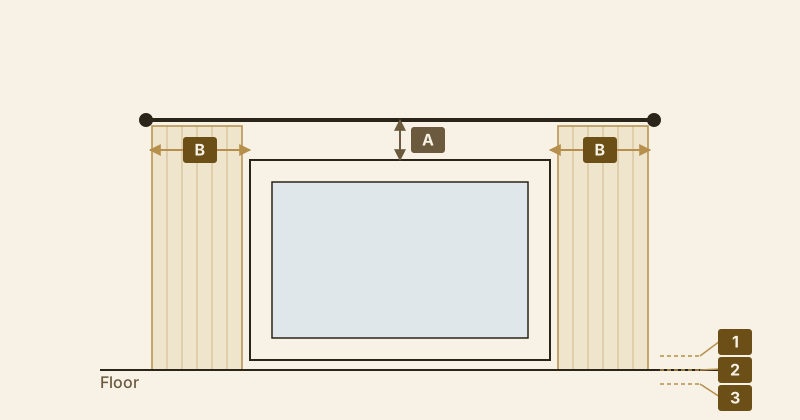
- A: rod height above the frame; higher makes the window look taller.
- B: overhang on each side, so open curtains clear the glass.
- 1, 2, 3: floating (above the floor), kissing (touches the floor) or break (rests on the floor) length.
Three reference points decide everything:
- Height (A): above the frame. The higher you go, the taller the window looks. Mouldings and the ceiling set the limit.
- Overhang (B): on each side, so the open curtains stack on the wall and clear the glass. The fuller the curtains, the more overhang they need.
- Obstacles: radiator, furniture, a door that swings, a light switch. Mark them on your plan.
Lightly pencil the rod line: every measurement that follows starts from it.
Step 2: measure the width
Measure the width from rod end to rod end, finials excluded, or the length of the track. That is the width the curtains must cover when closed. Tailoring adds fullness, the extra fabric that forms the pleats; it varies with the style: French pleat, flat pleat, grommets or rod pocket.
Step 3: measure the height and choose the length
Measure from the top of the rod (or the bottom of the track, depending on the hanging system) to the floor, at three points, because floors are not always level. Note all three; the advisor adjusts for the length you choose. Then choose:
- Floating: the curtain stops just above the floor. Practical, easy to vacuum under.
- Kissing: the curtain touches the floor. The cleanest look.
- Break: the curtain rests slightly on the floor. More romantic, in rooms with little traffic.
For a curtain that stops at or below the sill, measure to the point you want in the same way.
Step 4: think about fabric and lining
A heavy or blackout-lined fabric hangs differently from a sheer. If you bring your own fabric, note its width and pattern: the advisor calculates the yardage needed from the fullness and the pattern repeat, a point that often surprises.
What to write down
| Information | Why |
|---|---|
| Rod mounting height (A) | Sets the curtains’ height |
| Overhang on each side (B) | Lets open curtains clear the glass |
| Width from rod end to rod end | Width to cover, before fullness |
| Rod to floor (3 points) | Curtain length |
| Length wanted | Floating, kissing or break |
| Opening | Centre or one side |
| Fabric and lining | Drape, yardage, pattern repeat |
Our printable measurement sheet has these columns.
When to let an advisor measure
For tailoring we always recommend having the dimensions confirmed: mounting height, overhang and length are style choices as much as measurements, and they are best decided in the room. On request, an advisor measures at your home to the 1/8 inch, included in the quote.
What next?
Discover our custom curtains, valances and motorized tracks, then ask for a free quote. Fabric and pleat samples are best compared at the showroom, 865 boulevard Maloney Est in Gatineau.
What we get asked most
How high should the rod go?
Above the frame, never on it. The closer the rod gets to the ceiling, the taller the window looks and the larger the room feels. The exact height depends on the ceiling, the mouldings and the style you want; the advisor sets it with you on site.
How far should the rod extend on each side?
Enough for the open curtains to stack on the wall rather than in front of the glass, which keeps all the light. The overhang depends on the fullness, the fabric and the pleat style; your advisor works it out.
Which length: floating, kissing or break?
Floating, the curtain stops just above the floor: practical and easy to clean around. Kissing, it touches the floor: the cleanest look. Break, it rests slightly on the floor: more romantic, best kept for rooms with little traffic.
How do I measure for curtains that open in the centre?
The same way. Measure the total width from rod end to rod end and the height; tailoring splits the fullness into two panels that overlap slightly in the middle.
And for a motorized track?
The same reference points apply: mounting height, overhang and length. You also note the nearest outlet and the stacking space for the open curtains, since the track sets the opening side. See our motorized curtain tracks page.
Do you supply the rods and install?
Yes. Rods, finials, wall or ceiling brackets, tracks and motorized tracks. We measure on site and install, so the rod, the length and the drape work together from day one.